DeveshDigital creates stunning websites that turn visitors into loyal customers.
What Is Website Development ?
TWebsite development is the process of creating and maintaining websites for businesses and individuals. It includes designing web pages, writing code, and adding useful features. A well-developed website helps businesses build their online presence and reach more customers. It ensures a smooth experience across mobile phones, tablets, and computers. Website development also focuses on speed, security, and performance. With DeveshDigital, you can build a professional website that helps your business grow online.
Who Creates a Website?
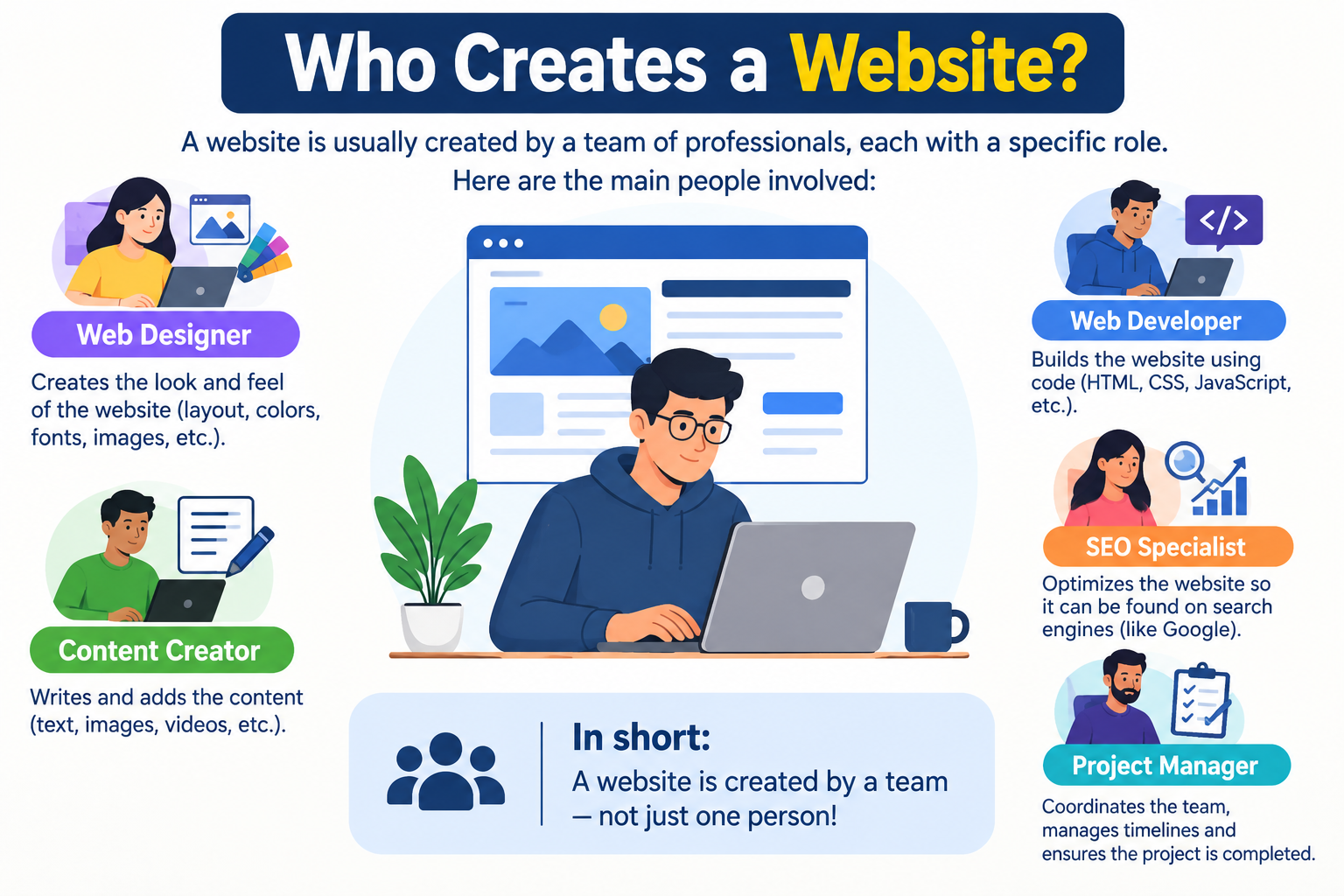
A website developer is a professional who builds, designs, and maintains websites. They use modern technologies to create attractive, functional, and user-friendly websites. Website developers ensure that websites work smoothly on mobile phones, tablets, and computers. They add interactive features, improve loading speed, and maintain website security. Their work helps businesses establish a strong online presence. A skilled developer turns ideas into digital experiences. DeveshDigital helps transform your vision into a professional website that supports your business growth.
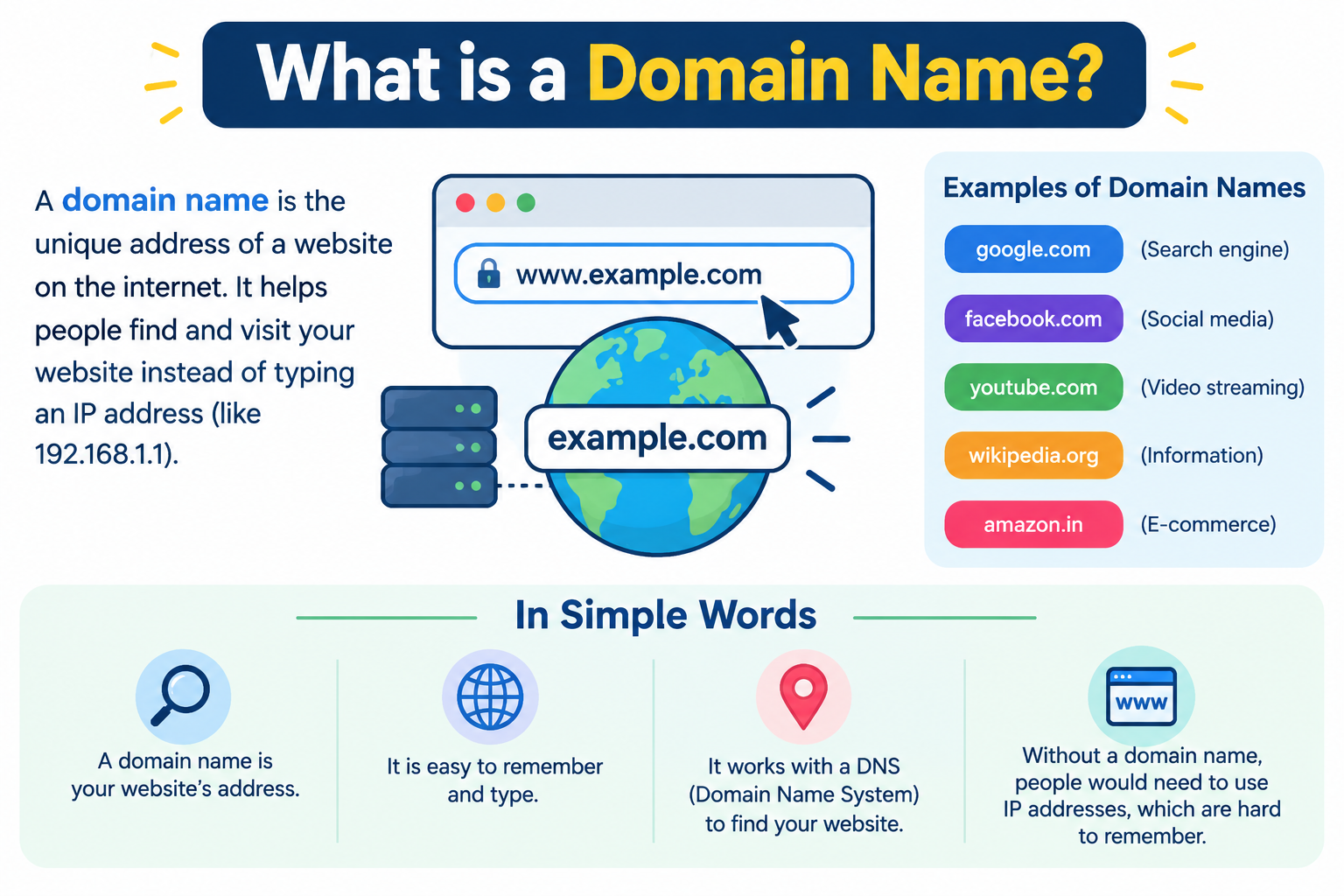
1. Website Address: A domain name is the address of a website on the internet.
2.Unique Name: It gives a website its own identifiable name.
3.Easy to Remember: It helps users visit a website easily.
4.Domain Extension: It ends with extensions like .com, .org, or .in.
5.Examples: Google.com, Amazon.in, and YouTube.com are domain names.
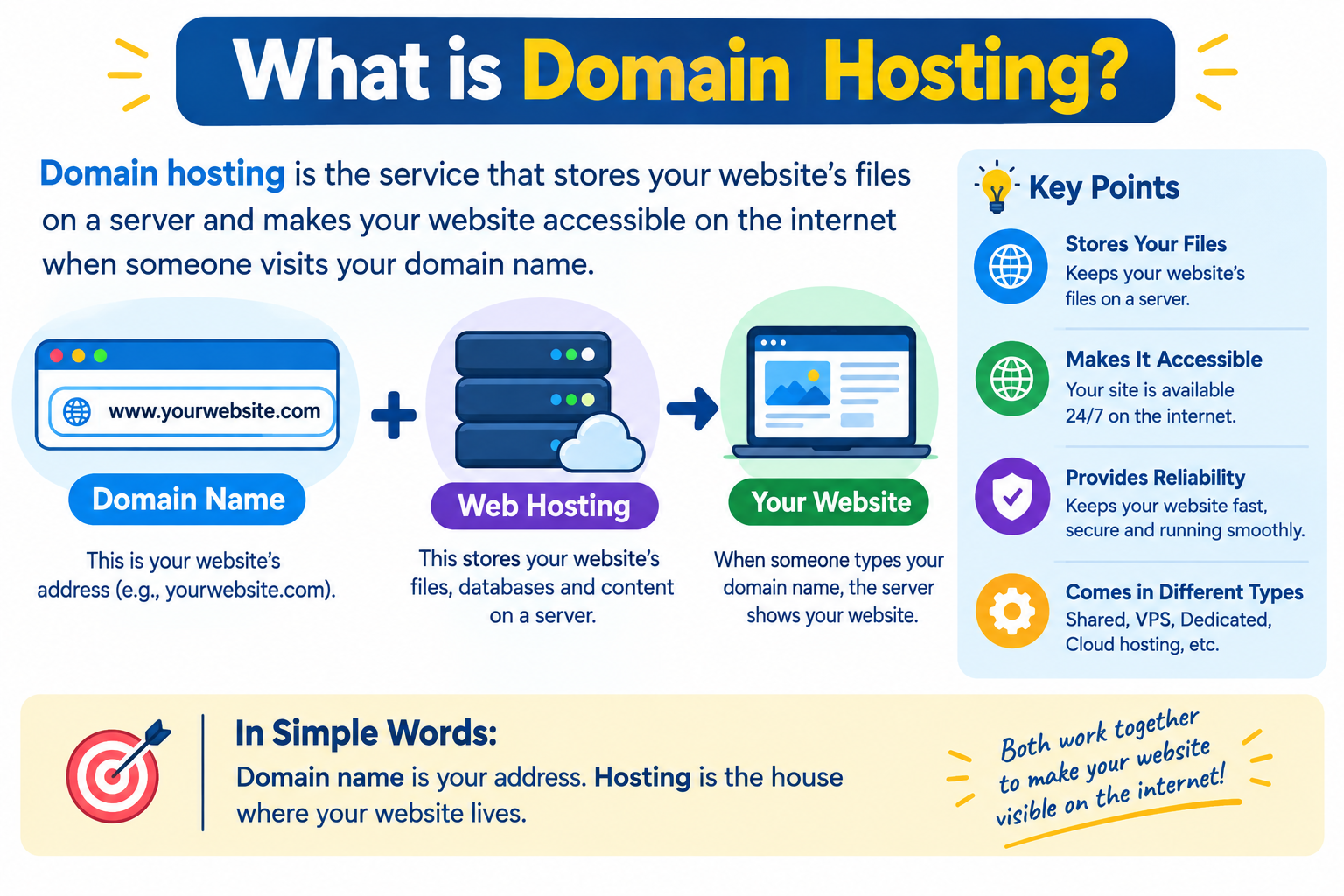
1.Website Storage: Web hosting stores website files on a server.
2.Server: A server makes website files available online.
3.Website Access: Hosting allows people to access your website through the internet.
4.Types of Hosting: Shared hosting, VPS hosting, dedicated hosting, and cloud hosting.
5.Domain Connection: A domain name connects users to your hosted website.
“Explore Different Types of Web Hosting”
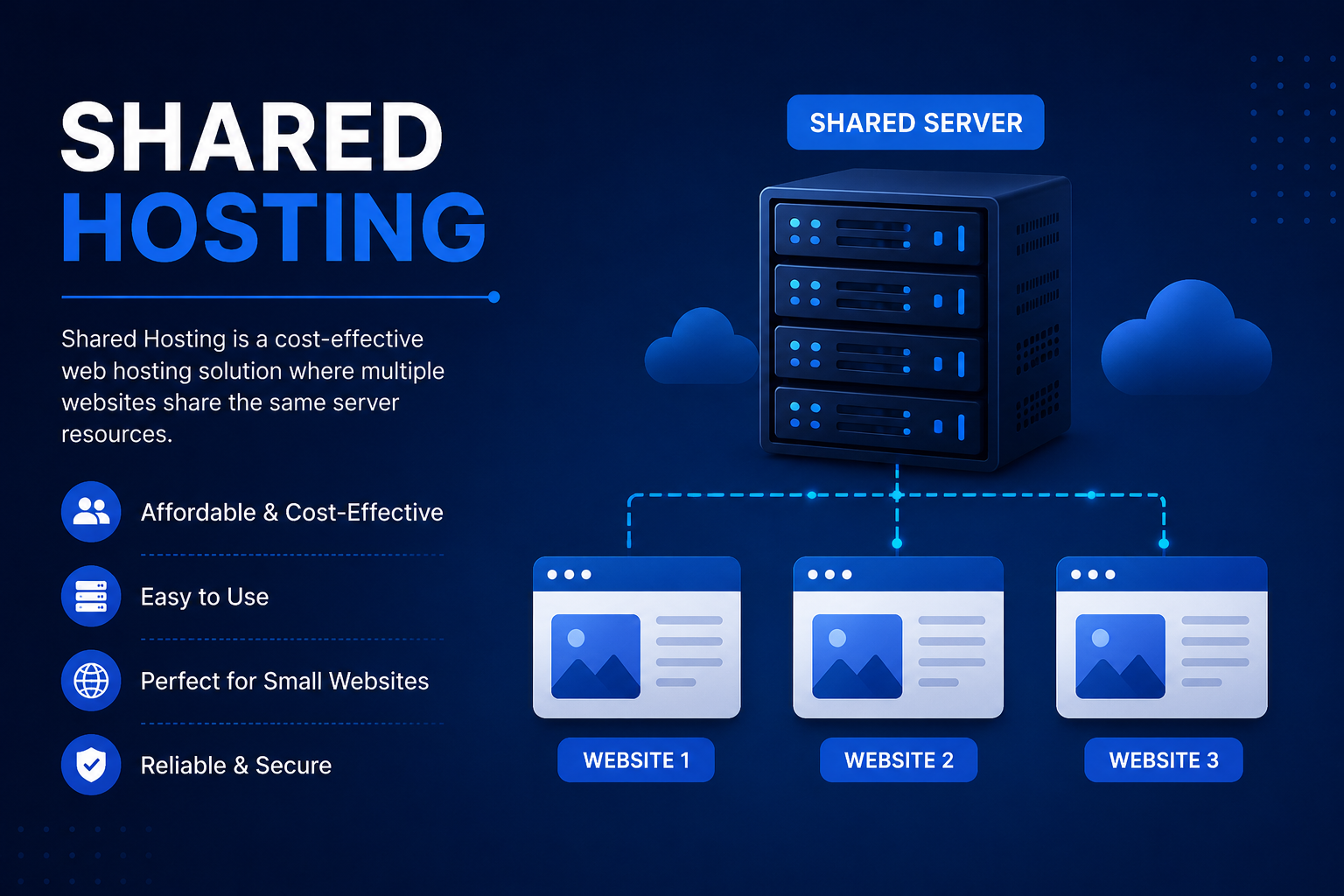
Shared Hosting: An affordable hosting solution where multiple websites share the same server resources.
Web Hosting: A service that makes your website accessible to visitors across the internet.
Dedicated Hosting: A premium hosting solution that provides an entire server exclusively for your website.
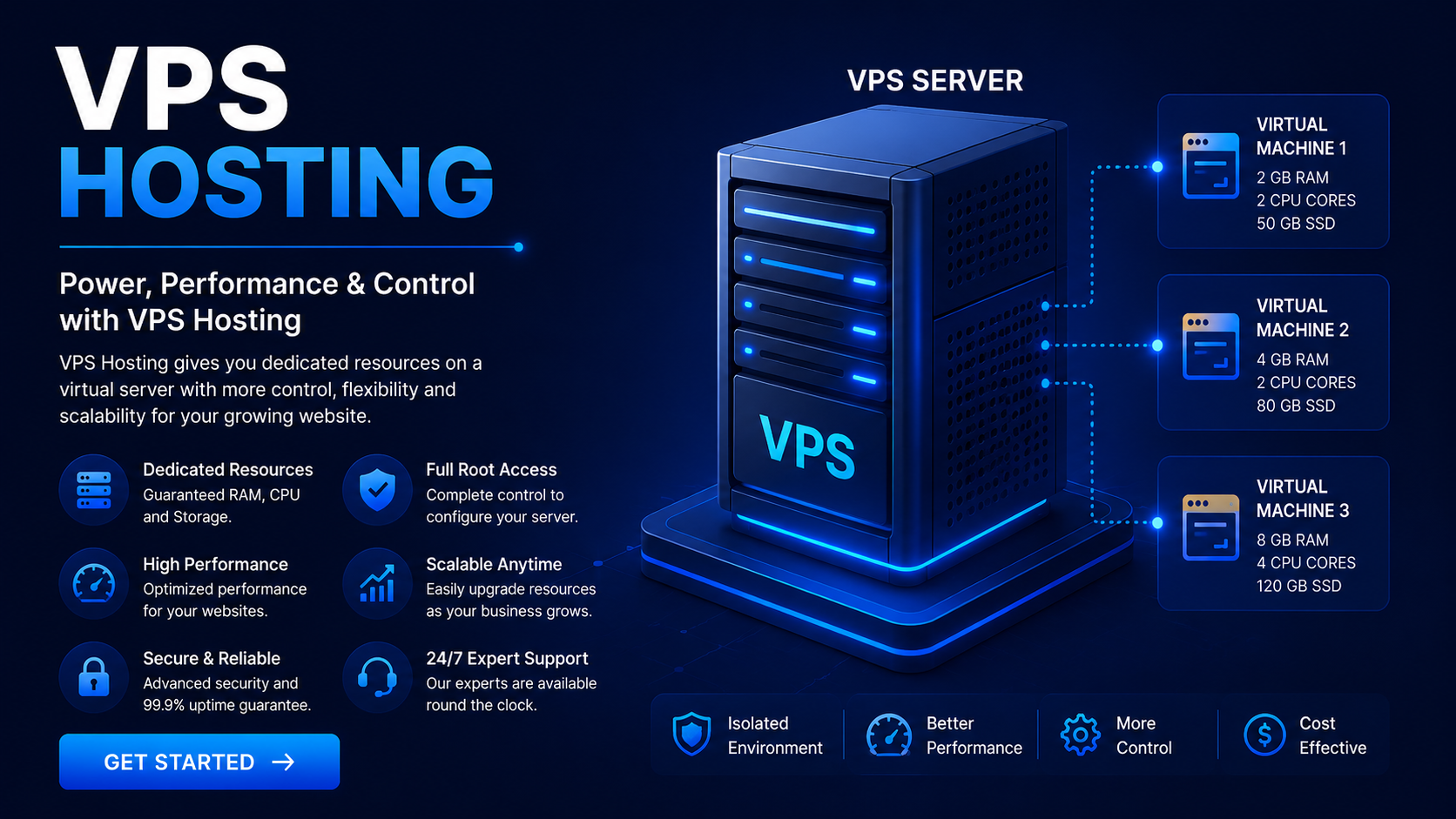
VPS Hosting: Enjoy dedicated resources, enhanced performance, and greater control with virtual private server hosting.
CMS Hosting: Power your content-managed website with optimized speed, security, and easy management.
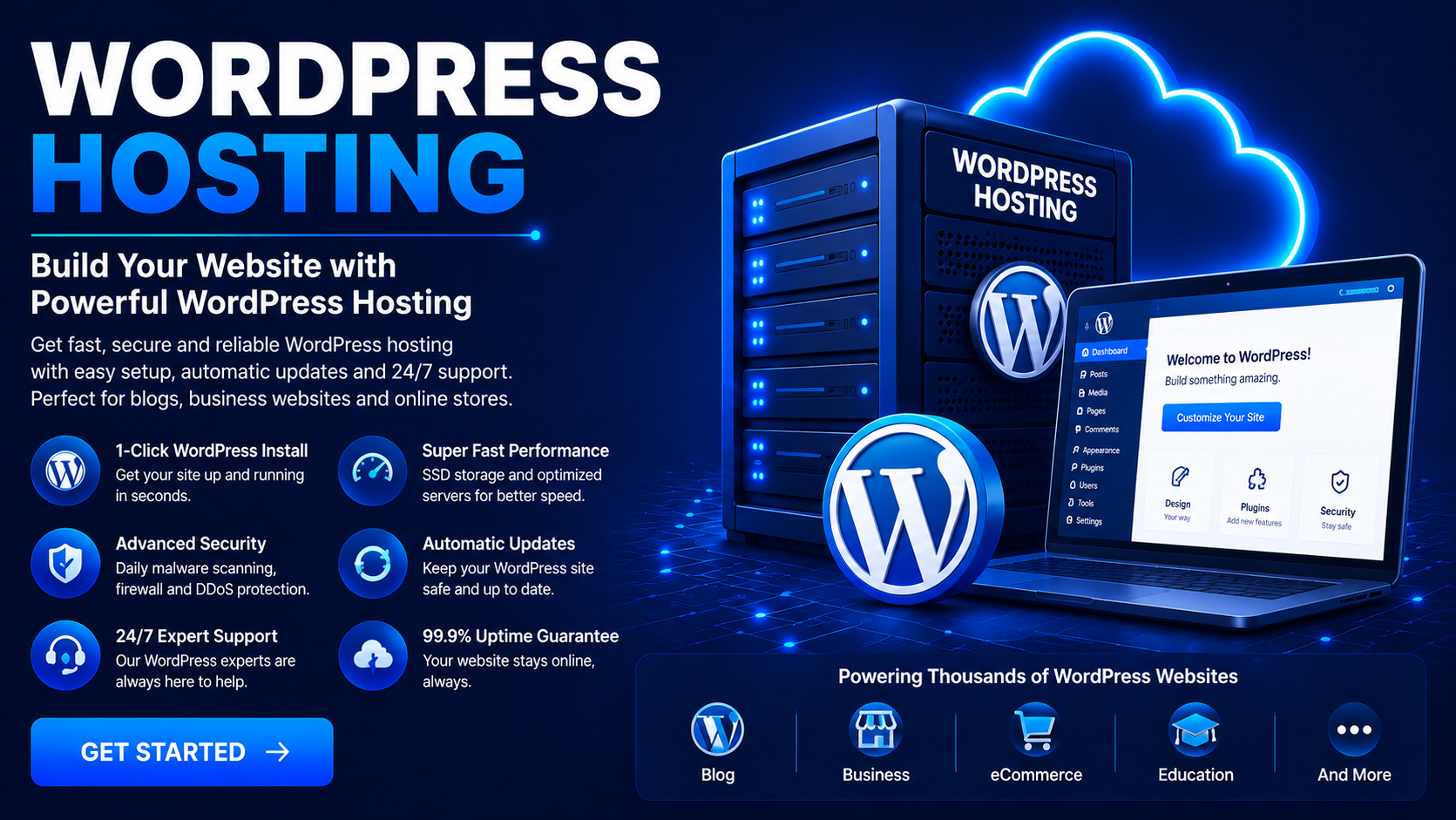
WordPress Hosting: Boost your WordPress website with fast loading speeds, enhanced security, and optimized performance.
What Is Sub domain ?
A subdomain is an additional part of your main domain that helps organize different sections of a website. It appears before your main domain name, such as blog.example.com or shop.example.com. Subdomains allow businesses to create separate areas for blogs, online stores, support pages, or other services. They can be managed independently from the main website while remaining connected to the same primary domain. Creating a subdomain usually does not require purchasing a new domain name. It helps improve website organization and makes navigation easier for visitors. y.
Understanding the Difference Between Domains and Subdomains
1. A domain is the main address people use to access your website.
2.It gives your website a unique identity on the internet.
3.Example: example.com
4.Domains must be registered through an authorized domain registrar.
5.A domain makes your website easier to find and remember.
6.Businesses use domains to build their online brand identity.
7.A domain can be connected to a hosting server.
8.Domains can be used for professional email addresses.
9.A domain can have multiple subdomains for different purposes.
10.Choosing a relevant domain helps establish a professional online presence.
1.A subdomain is an additional section created under a main domain.
2.Example: blog.example.com
3.Subdomains help organize different sections of a website.
4.They can be used for blogs, stores, or support portals.
5.A subdomain is created using an existing registered domain.
6.It can be configured to point to a different hosting server.
7.Subdomains help separate website functions and services.
8.They can have their own website design and content.
9.A single domain can have multiple subdomains.
10.Subdomains help businesses manage different online services efficiently.
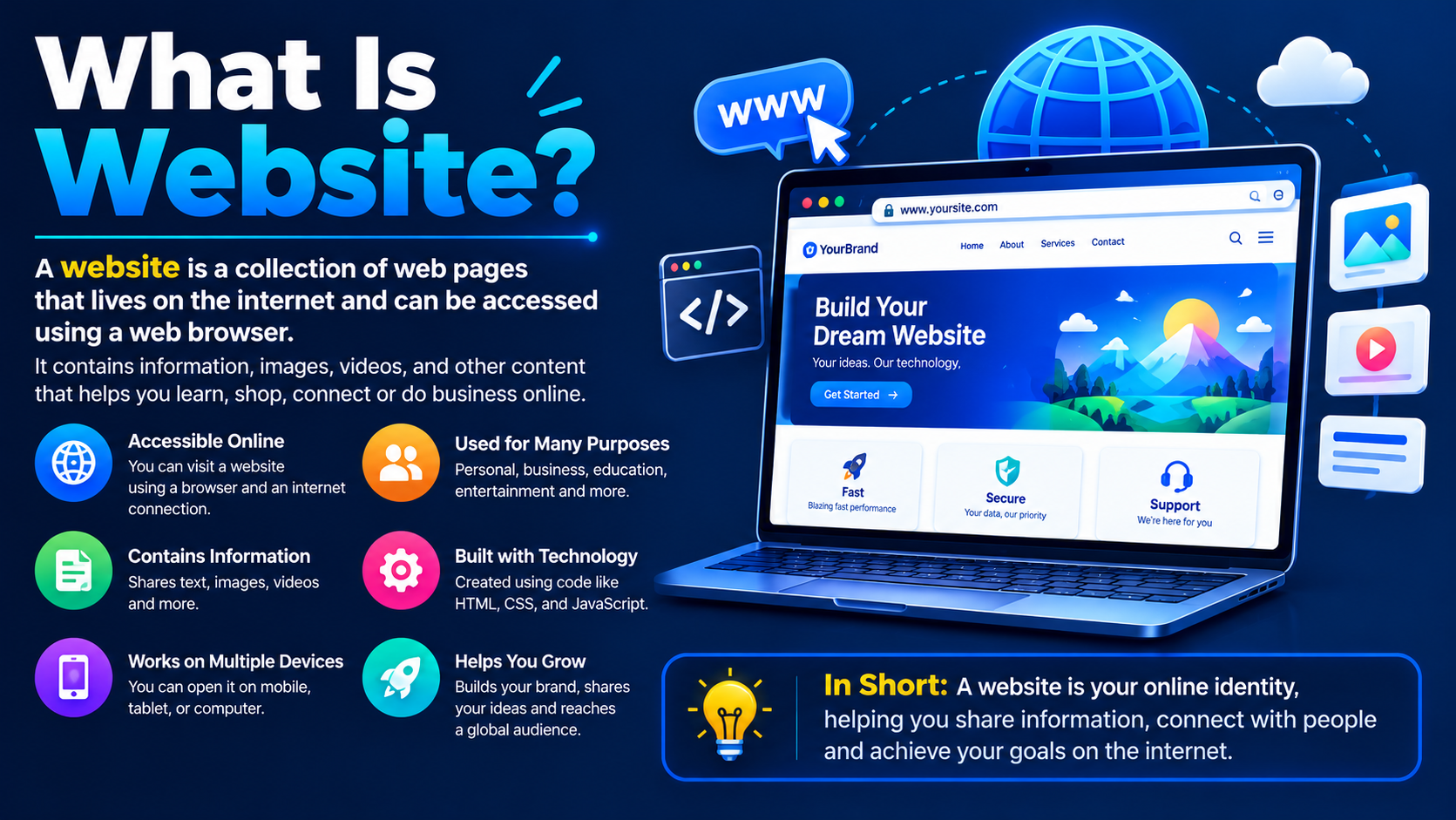
What is a website ?
A website is a collection of web pages available on the internet under a common domain name. It provides information, services, products, or other useful content to visitors. Websites can be created for businesses, blogs, educational purposes, online shopping, and personal use. Each website can include text, images, videos, forms, and interactive features. Users can access websites through web browsers on computers, tablets, and smartphones. A website helps businesses build their online presence and connect with potential customers. It can also be used to promote services, share knowledge, and generate sales. A well-designed website improves user experience, builds trust, and supports long-term business growth.
Explore the Various Types of Websites
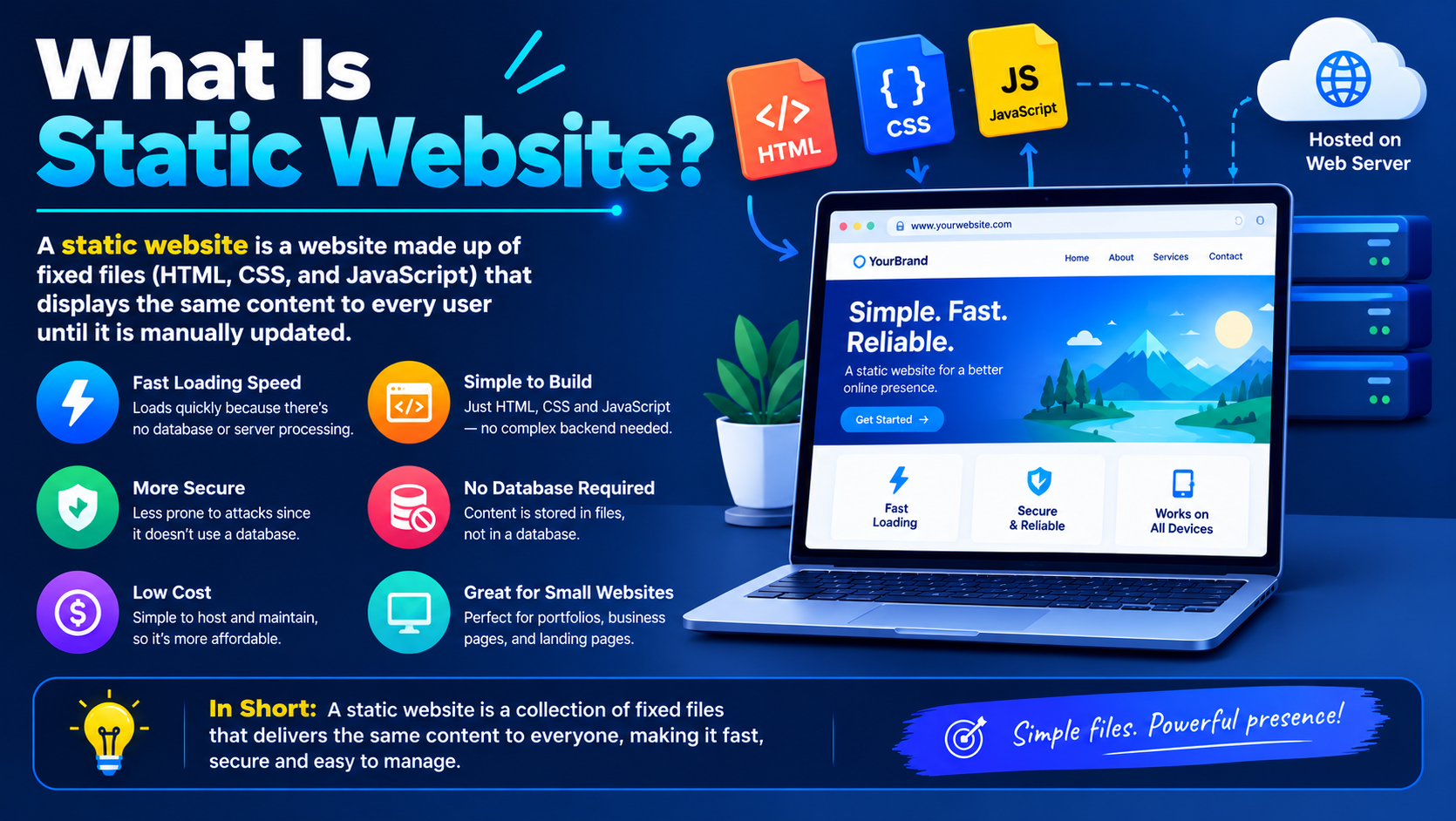
1. Static Website: A static website displays fixed content on its pages and is ideal for simple websites that require minimal updates.
2. Dynamic Website: A dynamic website displays interactive and frequently updated content based on user actions, databases, or other inputs.
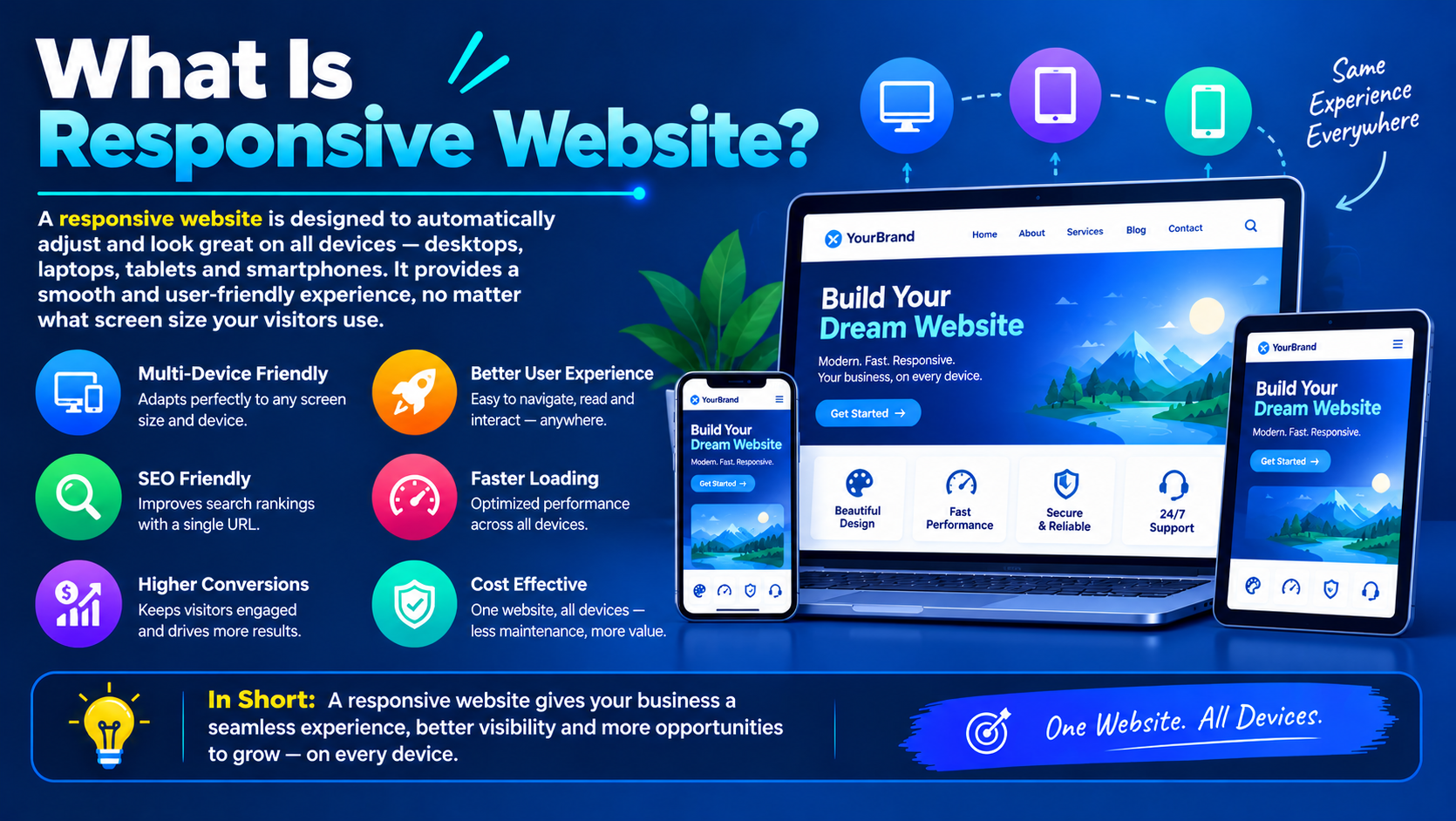
3. Responsive Website: A responsive website automatically adjusts its layout to fit different screen sizes, providing a smooth browsing experience on mobiles, tablets, and desktops.
Different Website Types and Their Purposes
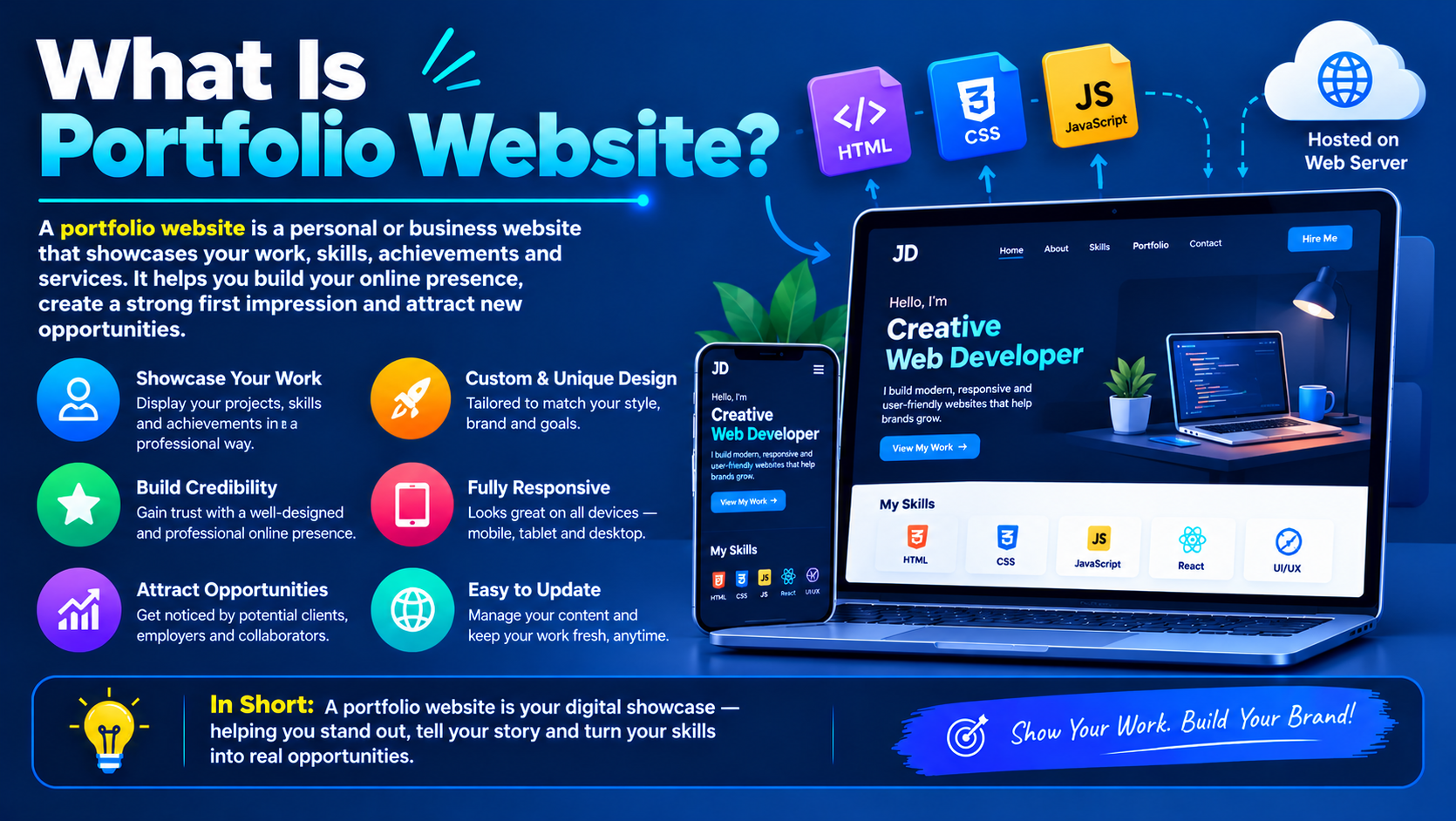
Portfolio Website A portfolio website showcases an individual's skills, experience, projects, and achievements in a professional way. It is commonly used by designers, developers, photographers, and freelancers to attract clients and highlight their work.
Blog Website A blog website is designed to publish articles, ideas, opinions, and informative content on different topics. It helps individuals and businesses share knowledge, engage readers, and improve their online visibility through regular content updates.
E-commerce Website An e-commerce website allows businesses to sell products and services online. Customers can browse products, compare prices, place orders, and make secure payments from anywhere.
Social Media Website A social media website enables users to connect, communicate, and share photos, videos, and other content online. It helps people build communities, interact with others, and stay updated with the latest information.
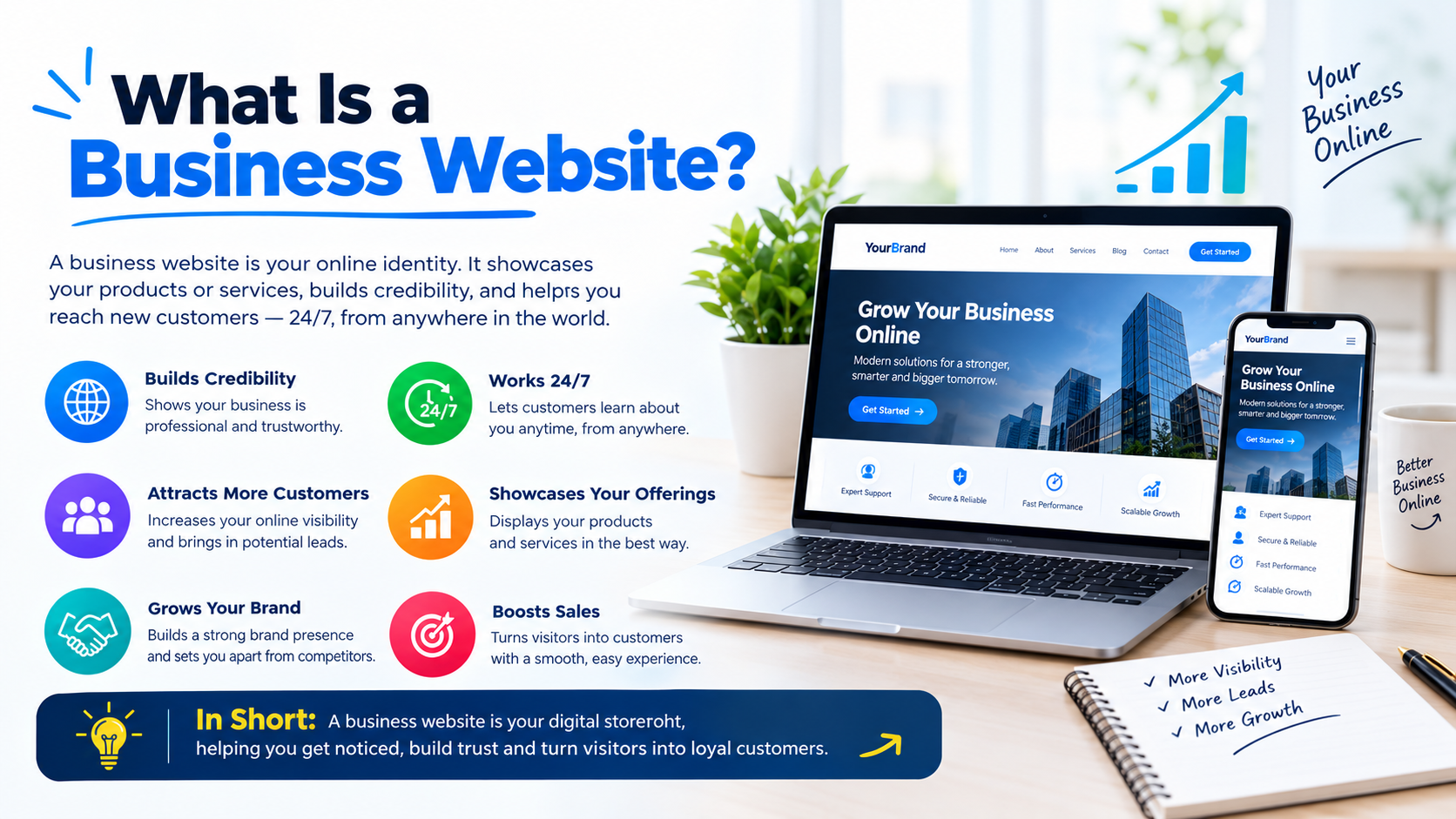
Business Website A business website helps companies showcase their products, services, and brand information online. It allows businesses to attract potential customers, build trust, share contact details, and grow their online presence.
Educational Website An educational website provides learning materials, online courses, tutorials, and educational resources for students and teachers. It helps users gain knowledge, develop new skills, and access learning opportunities from anywhere.
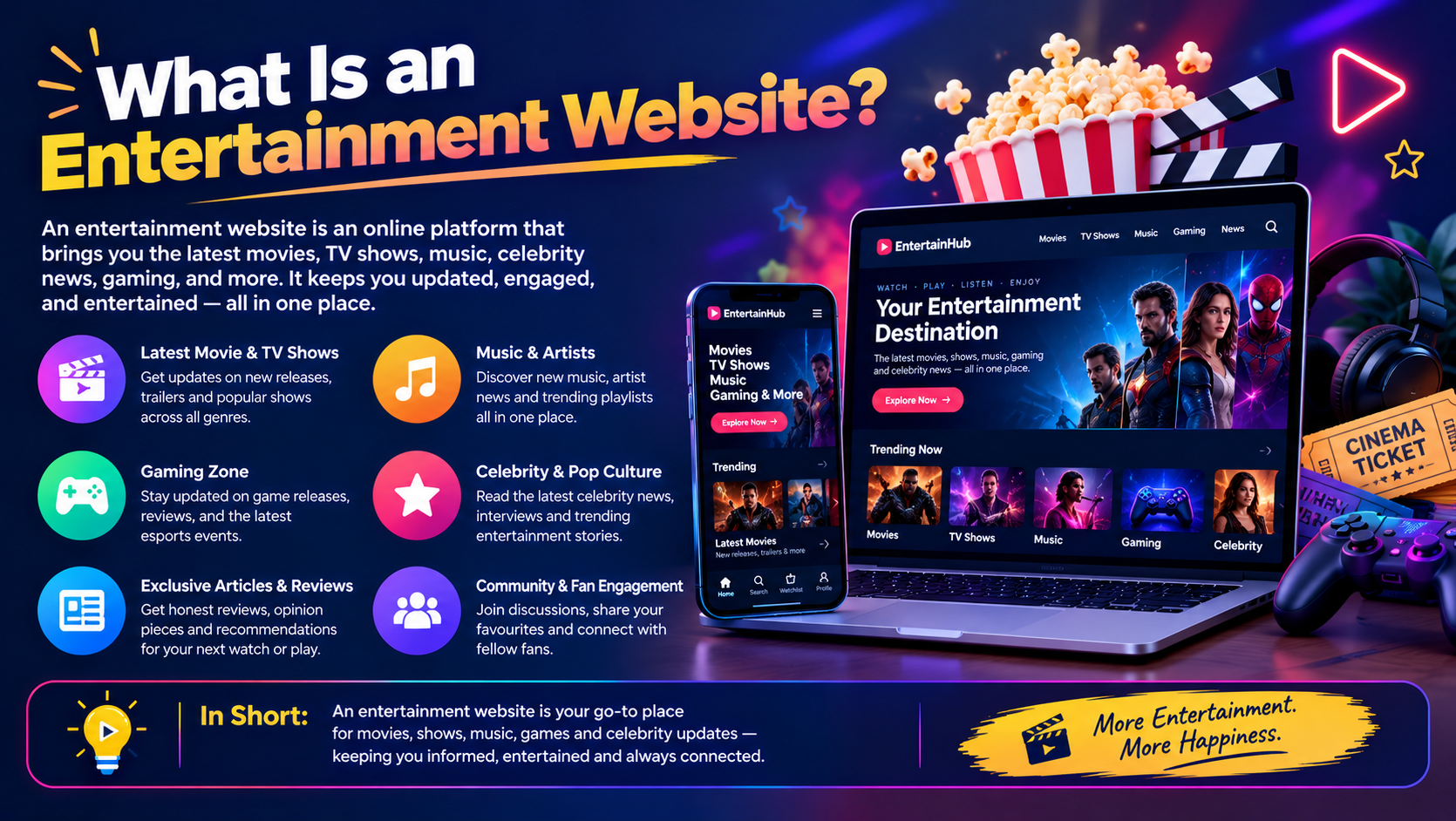
Entertainment Website An entertainment website provides users with movies, music, videos, games, and celebrity updates. It offers enjoyable content to audiences and helps them stay entertained through online platforms.
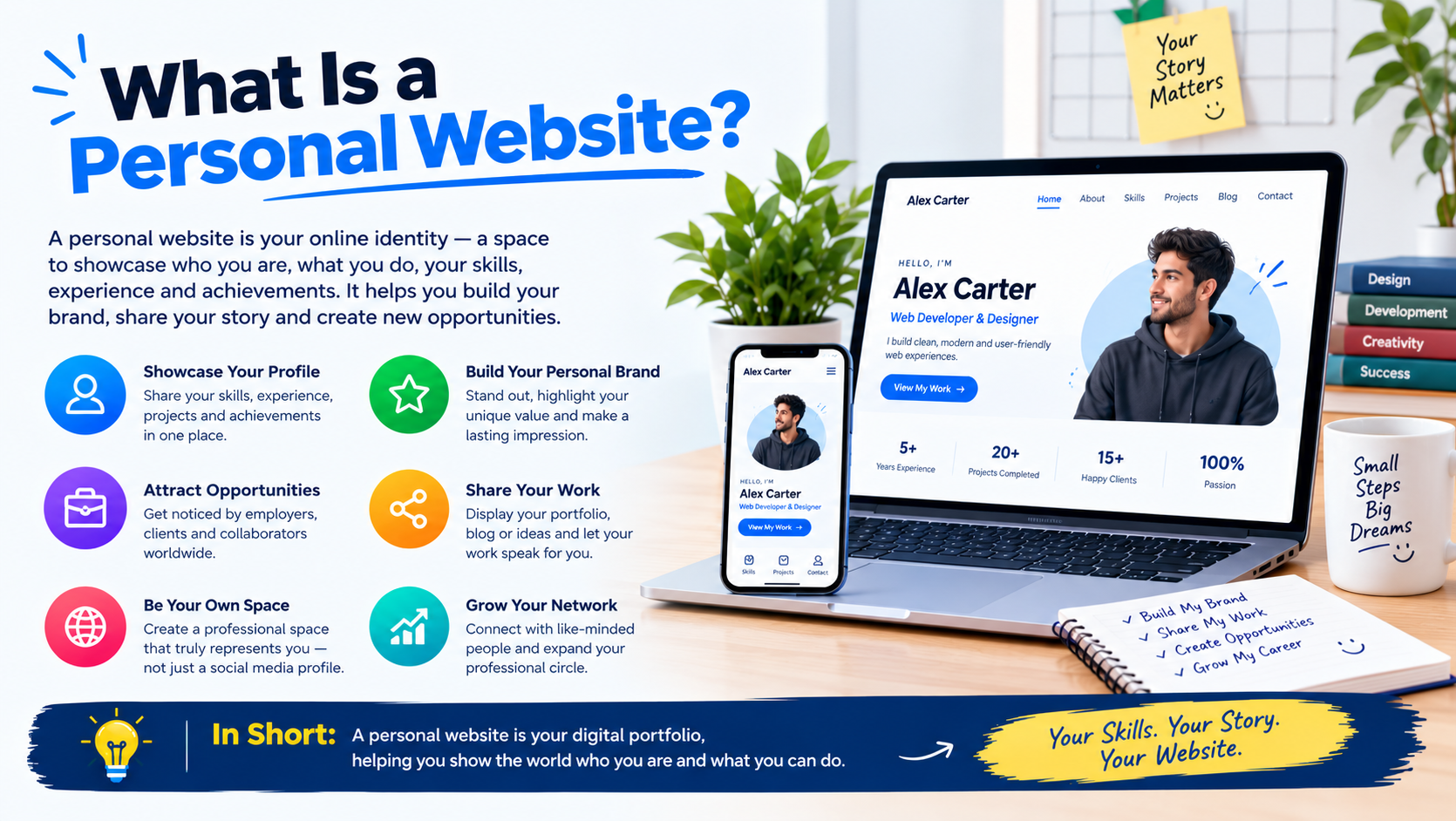
Personal Website A personal website showcases an individual's profile, interests, achievements, skills, and experiences. It helps people build their personal brand, share their ideas, and present their work or information online.
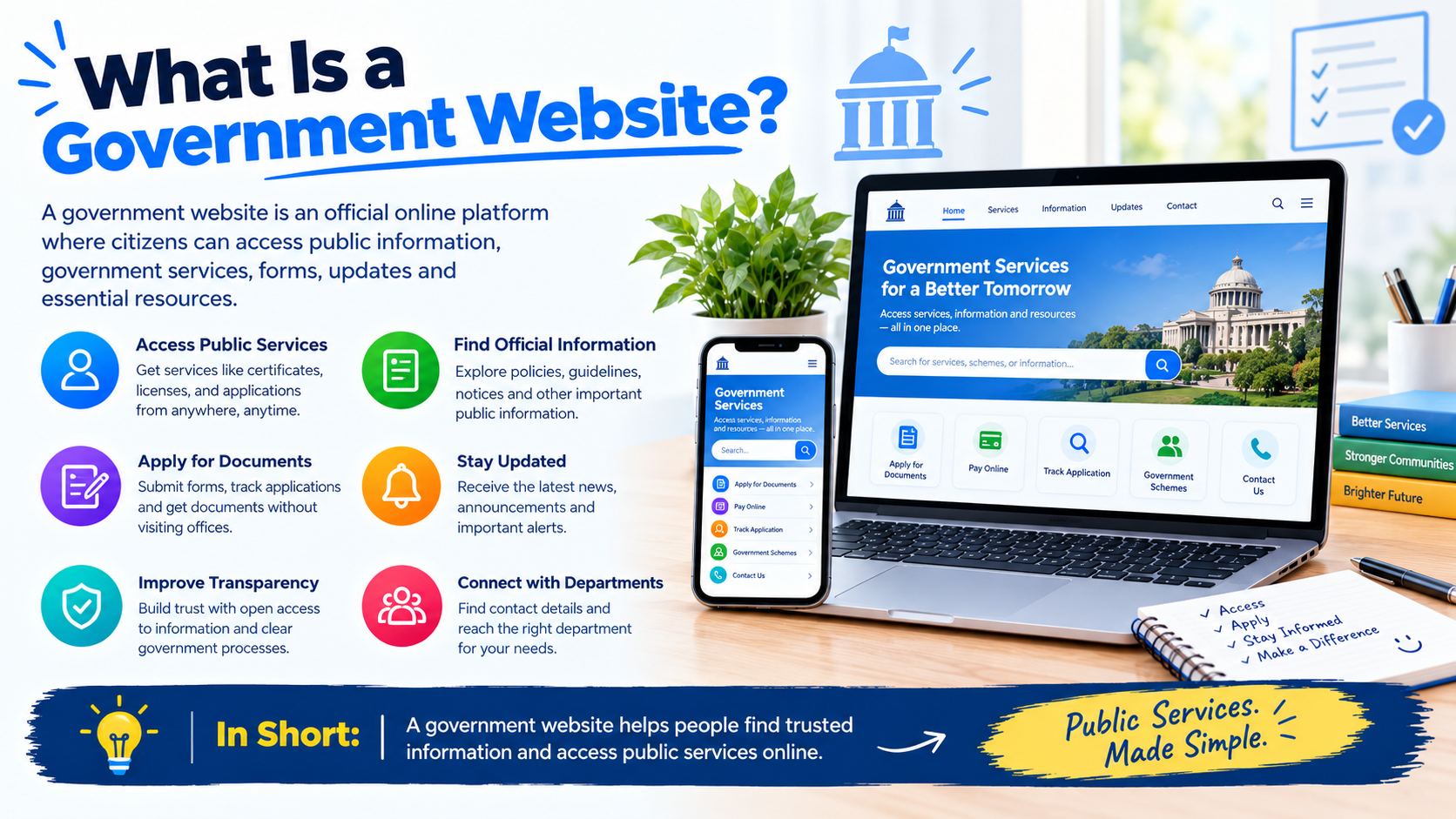
Government Website A government website provides official information about public services, policies, schemes, and government departments. It helps citizens access important updates, download documents, apply for services, and find reliable official information online.
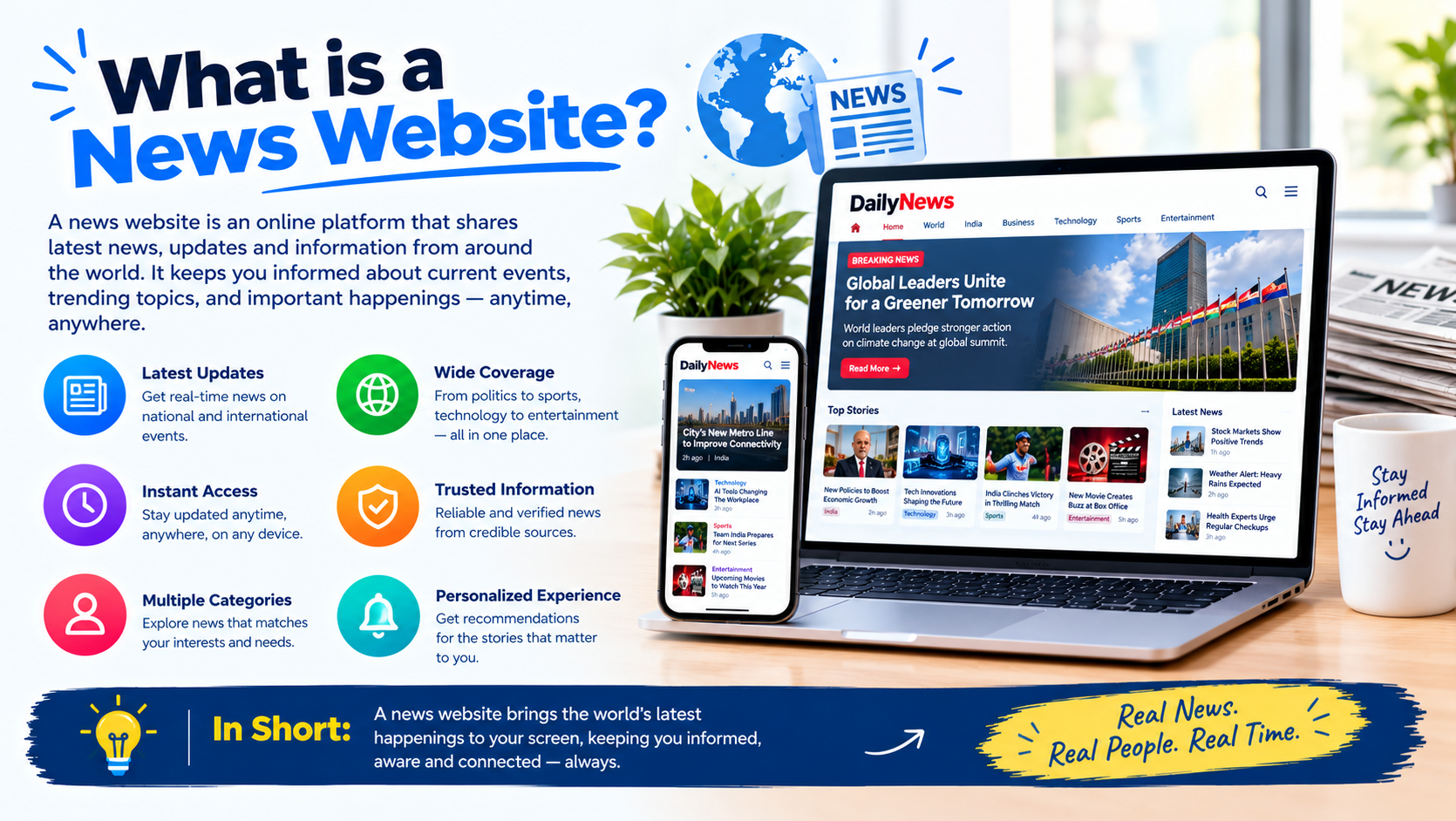
News Website A news website publishes the latest news, current affairs, and updates about politics, business, sports, technology, and entertainment. It helps readers stay informed about important events and access news from different locations around the world.
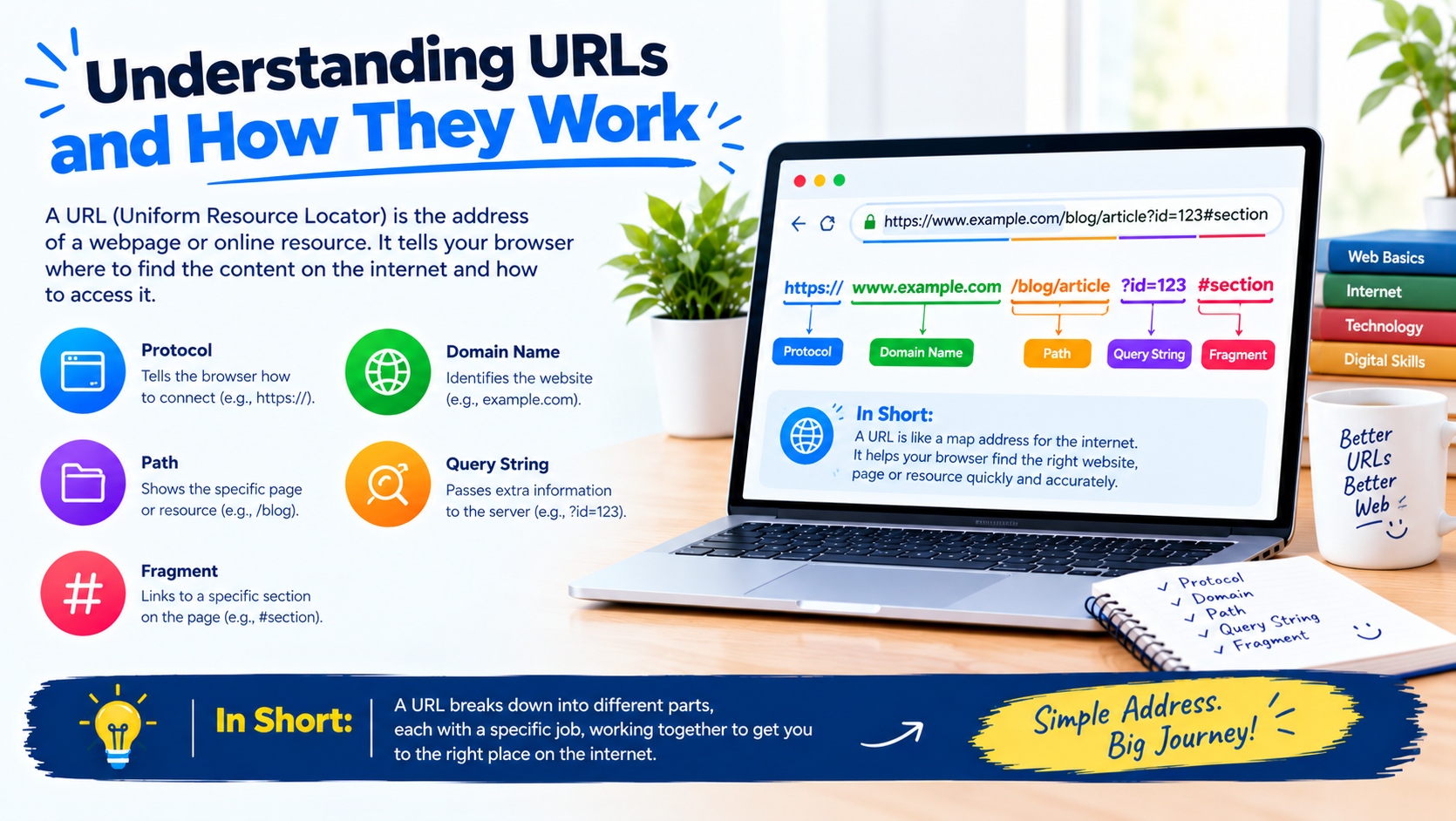
Understanding URLs and How They Work
A URL (Uniform Resource Locator) is the web address used to access a specific page or resource on the internet. It helps browsers locate websites, images, videos, documents, and other online content. A URL generally consists of several parts, including the protocol, domain name, and optional path. For example, https://example.com/blog is a URL where HTTPS is the protocol, example.com is the domain, and /blog is the path. When users enter a URL into their browser, the browser uses it to locate the requested resource. The domain name is translated into an IP address through the Domain Name System (DNS).
Leading Tools for Digital Growth
Ready to Grow Your Business Online
Let’s create a professional website that attracts customers, builds trust, and helps your business grow online.
Web Development FAQs: Everything You Need to Know